An Empty Room Isn't Neutral — What an Unsold Room Really Costs
An Empty Room Isn't Neutral — What an Unsold Room Really Costs
There's an accounting illusion that many hoteliers live with without realizing it.
If a room isn't sold on Thursday night, you haven't gained anything — but you haven't lost anything either. You're at zero.
This logic seems intuitive. And it's wrong.
An unsold room doesn't leave you at zero. It leaves you in the red — because it has real costs regardless of whether it's occupied or not. Electricity, air conditioning, furniture depreciation, fixed staff costs, common area maintenance. On average, the cost of keeping a room available ranges between 12 and 20 euros per day, regardless of whether anyone sleeps in it.
Multiplied by the number of unoccupied rooms and the number of days, the sum quickly becomes significant — and completely invisible in the way most hoteliers read their reports.
Why a Hotel Room Is a Different Product from Any Other
There is a characteristic of the hotel product that makes it unique from a revenue management perspective: it is completely perishable.
A furniture manufacturer who doesn't sell a wardrobe today can sell it tomorrow or next month. A hotel that doesn't sell room 204 on Thursday night can never sell it again for that night. The potential revenue of that night has disappeared permanently — not postponed, disappeared.
This perishability means pricing decisions have asymmetric consequences compared to other industries. Too high a price leads to empty rooms — certain loss. Too low a price fills the hotel but leaves money on the table. The right price is somewhere in between — and it changes every day, depending on what's happening in the market.
Where the Room Is Sold — and Why It Matters
Your hotel room exists physically in one location. But it sells digitally — on your website, on OTA platforms, on Google Hotels, on local tourism platforms.
Each of these channels is a showcase. A poorly presented showcase, with weak photographs or incomplete information, loses customers before they even get to prices. A well-presented one — with current photos, clear descriptions, visible reviews — converts visitors into bookings.
But being present on a single channel is insufficient. The modern guest compares. They search on Google, check an OTA platform, may end up directly on the hotel's website. If you're present on one of the three channels they check, you miss two out of three opportunities.
Presence on multiple channels immediately raises an operational problem: how do you keep inventory synchronized? A room booked on one channel must disappear instantly from all others. If this synchronization is done manually or with a delay, the risk of overbooking grows proportionally with the number of channels.
Manual management of availability across multiple platforms is not a sustainable solution once booking volume grows. Not because it's impossible — but because it's a constant source of errors and wasted time that could be completely eliminated.
Price — The Most Dynamic Ingredient
If availability is what you sell, price is how you optimize what you earn from what you sell.
A fixed rate — the same throughout the year, with small seasonal variations — is the easiest to manage and the least efficient from a revenue perspective. The market is not static: demand fluctuates based on days of the week, local events, competitor behavior, booking trends.
A dynamic rate — one that adjusts based on current occupancy, how much time is left until the date, and what the competition is doing — captures value where it exists and stimulates bookings where demand is weak.
The concrete difference: a hotel with 40 rooms switching from fixed rates to a well-implemented dynamic strategy can see a RevPAR increase of 10-25% in the first year, without increasing the number of guests.
What the Hotel Knows About Its Guests — and What It Could Know
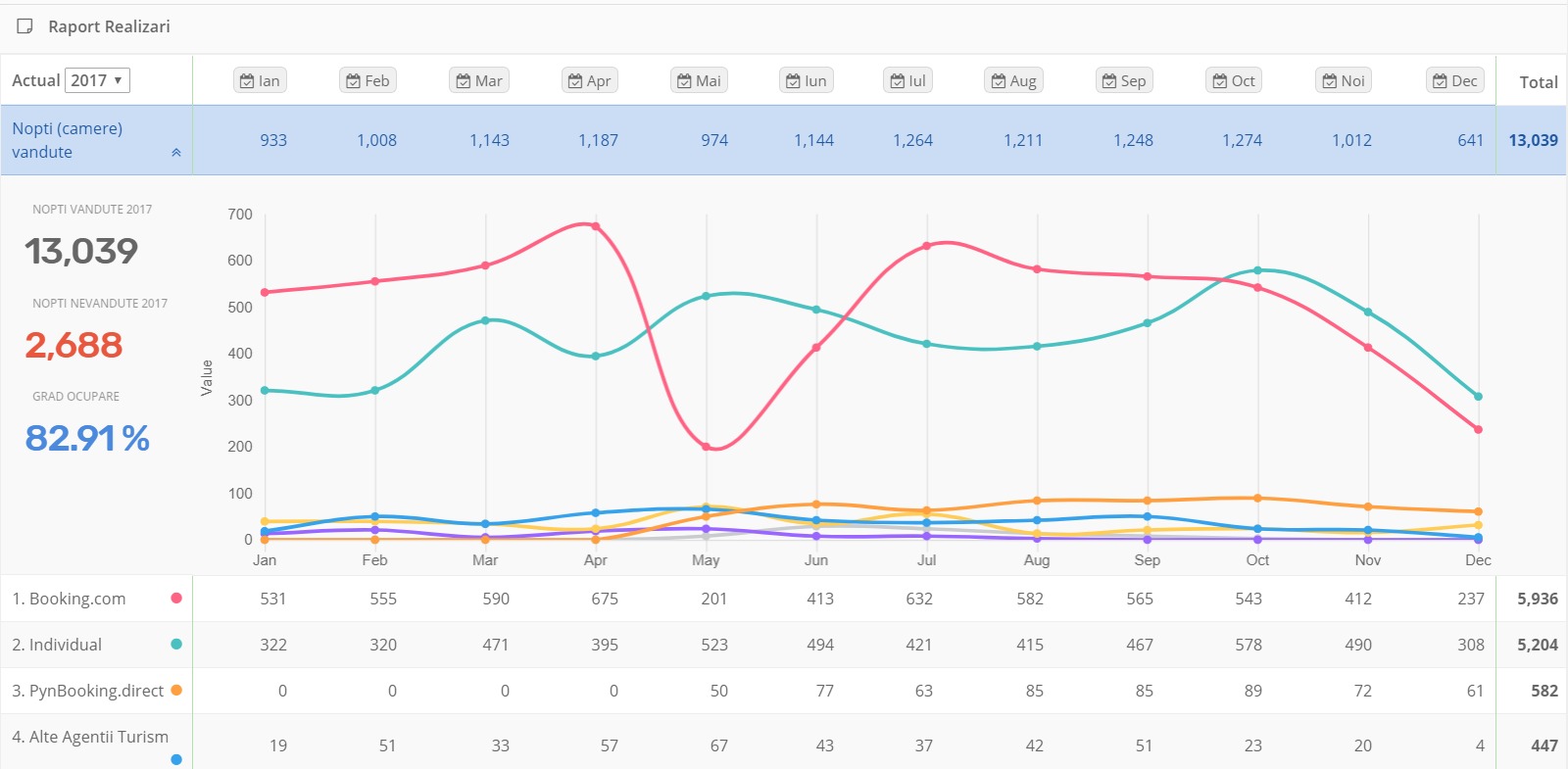
Every booking brings information: who books, where they're from, through which channel, for how many nights, whether it's a special occasion, whether they've stayed before. This information is collected every day — and ignored in overwhelming proportion.
A hotel that knows that 40% of its guests come from Germany will allocate marketing resources differently from one that doesn't know that. A hotel that knows that guests who book directly stay on average one night longer than those who book through OTAs will invest differently in the direct channel.
Data from the PMS isn't an archive — it's an active decision-making tool, if used as such.
What a Hotel That Sells Well Looks Like — A Practical Summary
There is no single formula, but consistently high-performing hotels have a few things in common.
They are present on all relevant channels with up-to-date information and quality photographs. Availability is synchronized automatically — no channel displays rooms that are no longer available. Prices are adjusted regularly based on occupancy, competition, and calendar. There is a functional direct booking channel, simple to use on mobile. Guest data is used to personalize communication and offers.
None of these things require a revenue management department or a large marketing budget. They require clear processes and tools that work correctly together.
Pynbooking PMS with integrated Channel Manager automatically synchronizes availability and rates across all channels in real time — Booking, Airbnb, Expedia, Google Hotels, your own website and others — eliminating the risk of overbooking and time wasted on manual updates.
