How Hoteliers Can Get More Walk-In Bookings
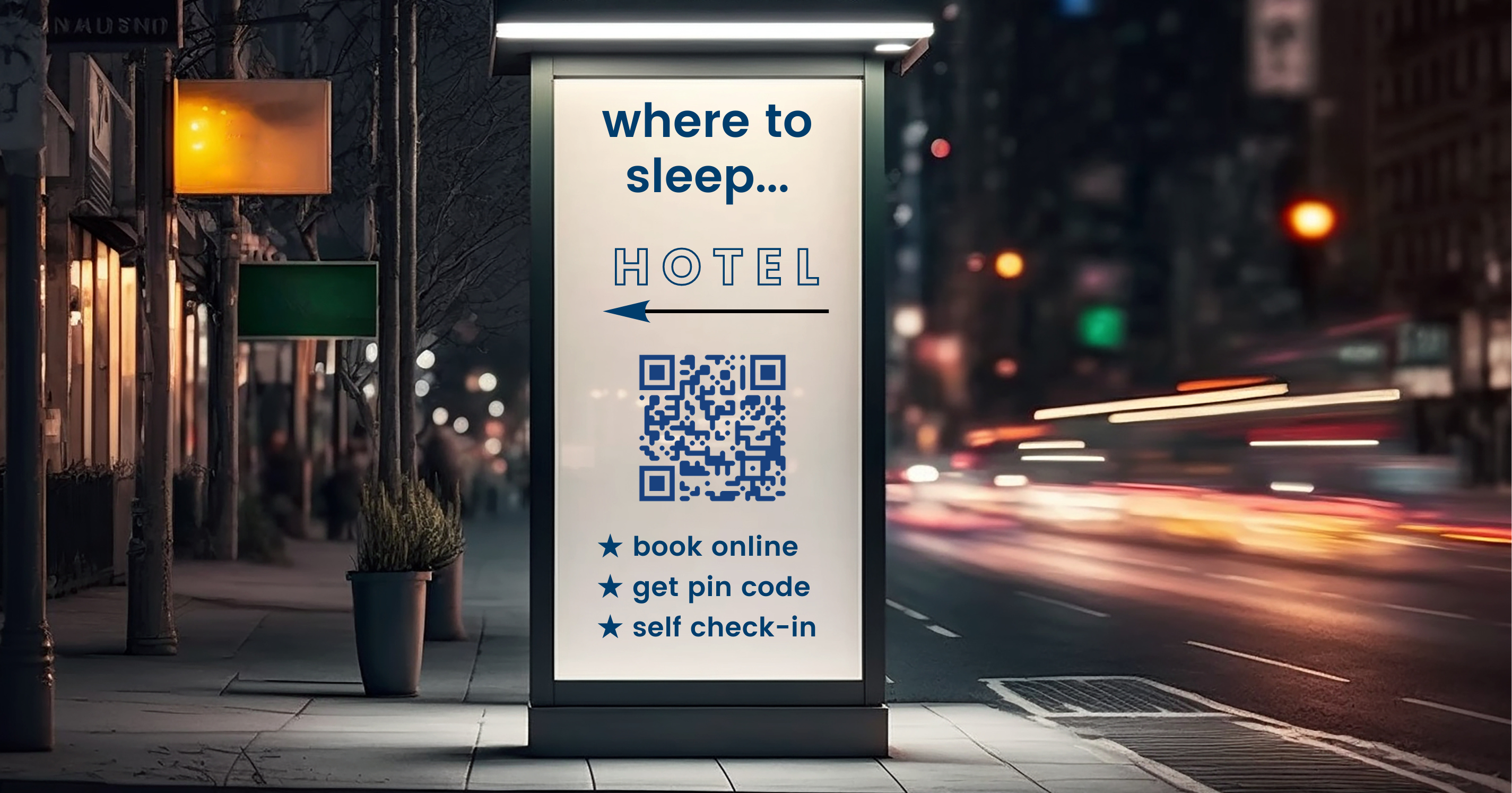
The Tourist Standing in Front of Your Hotel — How to Turn Them into a Guest
There is a type of booking that hotels almost completely ignore — and which, in tourist areas, can represent a significant source of revenue.
It doesn't come from Booking. It doesn't come from email campaigns. It doesn't come from SEO or social media ads.
It comes from the person walking down the street, stopping in front of your hotel, looking at the facade, thinking it looks great — and not knowing how to book right now, on the spot, without opening 4 tabs and comparing prices.
This potential guest exists every day in front of any hotel in the center of a tourist city, a resort, or an area with high pedestrian traffic. And for the most part, they walk away without booking — not because they don't want to, but because there is no simple bridge between their interest and the act of booking.
How the Spontaneous Booking Decision Works
Bookings planned in advance have a long cycle — research, comparison, postponement, return, booking. The guest has time to change their mind multiple times.
A spontaneous booking has a 60-second cycle. The person is in front of the hotel, has an immediate need or sees an opportunity, and decides on the spot. If within those 60 seconds they don't find a simple way to act, the impulse disappears.
This is the fundamental difference from any other form of marketing: you don't reach the guest, the guest reaches you. And you don't need to convince them — they're already convinced. You just need to give them a button.
The QR Code — The Bridge Between the Street and the Booking
A QR code placed visually in front of the hotel — on the window, on a plaque near the entrance, on a banner — does exactly this: it transforms spontaneous interest into immediate action.
The tourist takes out their phone, scans, and lands directly on your hotel's booking page. Not on Booking. Not on a comparison site. Directly on your booking engine, where they can see available rooms, prices, and complete the reservation in a few minutes.
No intermediaries. No commission. No need to pass through reception before knowing if there's availability.
Why It Works Better Than It Seems
There is a perception that walk-in bookings are rare or insignificant. The reality depends entirely on location and season.
A hotel in the center of a tourist city, on a street with high pedestrian traffic, on a weekend or in season, can generate daily direct bookings through this channel — if it has the infrastructure to capture them. Without the QR code, those bookings simply don't happen or they happen through OTAs, on the guest's phone, a few hours later.
More importantly: the guest who books spontaneously and directly is a guest who hasn't gone through any platform. There is no commission, no guest data owned by a third party, no dependency on external platform algorithms.
What Makes a Hotel QR Code Work
Not just any QR code works. A QR code that leads to the website homepage — not the booking page — loses half the interest in the extra steps the guest has to take.
A few essential conditions:
Direct destination. The code must lead directly to the booking engine, not to an intermediary page. Every additional click reduces conversion.
Mobile optimization. The guest scans from their phone. The booking page must load quickly, be easy to navigate on a small screen, and allow payment in a few taps. If it doesn't work well on mobile, the QR code serves no purpose.
Visibility and context. A small QR code placed low on an unattractive plaque is invisible. A large code with a clear message — "Book direct, no commission" or "Check availability now" — attracts attention and explains why it's worth scanning.
Clear offer. If you can offer an exclusive benefit for direct bookings — breakfast included, late checkout, a small discount — mentioning it next to the code significantly increases the scan rate.
Beyond the Street — Other Places Where QR Codes Work
The same mechanism works in several contexts that hotels overlook:
At the front desk, for guests who want to extend their stay or make a future booking without waiting in line.
At the restaurant or spa, for guests who use services but aren't staying — and who could be convinced to book a room if given immediate access.
At local events, conferences, or tourism fairs — a simple flyer with the QR code and a specific offer can capture bookings from people who wouldn't have otherwise thought to look for your hotel.
At local partners — restaurants, travel agencies, information centers — where a display with your QR code brings bookings from their traffic.
The Spontaneous Booking — The Undervalued Channel
In a hotel's distribution strategy, online channels receive the most attention: OTAs, SEO, ads, email marketing. All have costs — either direct or in time.
The physical channel — the guest who walks past the hotel — has zero acquisition cost. They're already there. The only investment is the infrastructure to capture them: a QR code, a functional booking engine, a clear message.
For hotels with favorable locations, ignoring this channel means leaving bookings on the table every day of the season.
Pynbooking Booking Engine includes automatic QR code generation directly from the platform — one click and you have the code ready to print and display. The guest scans and lands directly on your booking page, with no intermediaries and no commissions.
