Why Satisfied Guests Don't Leave Reviews — And How to Change That
There is a fundamental inequity in the online review system that every hotelier feels, even if they don't articulate it explicitly.
The dissatisfied guest acts. They have a strong emotion, a sense of injustice, and the review is the natural channel through which they express it. They write quickly, with details, with conviction.
The satisfied guest intends. They had a pleasant stay, vaguely thought "I should write something nice" — and never did. Not because they don't want to. But because there was no moment that transformed intention into action.
The result is that your online profile disproportionately reflects negative experiences — not because your hotel is bad, but because the dissatisfied write and the satisfied don't.
Changing this imbalance is not a matter of manipulation or pressuring guests. It's a matter of process — of creating the moment and the path through which intention becomes action.
Why Guests Don't Leave Reviews, Even When They Were Satisfied
Understanding the real reason is more useful than any list of tactics.
The moment passes. Willingness to leave a review is at its peak in the first hours after checkout. The experience is fresh, the emotion is present. If at that moment there is no clear invitation and a simple path, the window closes. The next day, the stay has already entered competition with other priorities. After a week, the details have faded.
The process seems complicated. Many guests don't know exactly where to leave a review, how it works, how long it takes. The mental image is of an essay to be written from scratch — and this perception is enough to indefinitely postpone an action that would actually take two minutes.
Nobody asked them. It sounds trivial, but it's real: satisfied guests don't spontaneously think to leave a review if they're not invited to do so. It's not indifference — it's simply that they haven't received a signal that their review matters and is expected.
The Moment — The Only Factor That Truly Matters
If you had to choose just one thing to optimize in your review process, choose the timing of the invitation.
An invitation sent 12-24 hours after checkout converts significantly better than any other option. Not at checkout — the guest is in a rush, with luggage, with a taxi. Not after a week — the experience has diluted. A few hours after departure, when they're home or on their way, with their phone in hand and the stay still fresh in their mind.
Automating this moment is essential — not because it's more effective than a human request, but because it's the only way to be consistent. The receptionist forgets, has other priorities, feels uncomfortable asking. An automated email sent at the right moment never forgets and never feels uncomfortable.
How to Word the Invitation So It Works
There is a difference between asking and inviting.
"Please leave a review" is a request. It puts the guest in the position of doing a favor.
"If you had a good experience, other travelers would appreciate reading about it" is an invitation. It puts the guest in the position of contributing something useful to others.
The second phrasing converts better — not because it's more persuasive, but because it's more authentic and less pressuring.
A few principles that make a difference in the text:
Personalize — mention the guest's name and something specific from their stay. An email that starts with "We hope you enjoyed the room with the mountain view" is read differently from "We hope you had a pleasant stay".
Simplify — one link, one platform, zero intermediate steps. Each additional click reduces conversion. A direct link to the review page converts 3-4 times better than instructions like "go to Booking, find our hotel and leave a review".
Keep it short — three to four sentences, not a long paragraph. People don't read long emails from hotels, no matter how well written they are.
Which Platform to Prioritize
When inviting guests to leave a review, focus on a single channel per guest — the one they already used.
The guest who booked through an OTA will most naturally leave their review there — they're already logged in, know the interface, don't need to create a new account. The guest who booked directly on the hotel's website is easier to direct to Google or to the review section on the site.
Asking for reviews on three platforms simultaneously doesn't triple reviews — it creates confusion and reduces action.
Negative Reviews — The Resource You're Ignoring
A negative review received before the guest leaves is an opportunity that almost all hotels miss.
If a guest signals a problem to you — through a request in the guest app, through a message, through a conversation with staff — and the problem is resolved the same day, the probability that that experience becomes a public negative review drops dramatically. The story has changed: it's no longer "there was a problem" but "there was a problem and they resolved it immediately".
Requesting feedback during the stay, not after, is the most effective strategy for preventing negative reviews — and it's the channel that hotels exploit the least.
How to Respond to Reviews — With or Without AI
Potential guests read responses just as carefully as reviews. A hotel that responds consistently, in the same tone, to all reviews sends a strong signal of professionalism and care for guests.
The problem is volume. An active hotel can receive dozens of reviews per month, from multiple sources — Booking, Airbnb, Google, its own site. Managing all of these manually, on separate platforms, consumes hours per week.
The solution adopted by modern hotels is centralization and partial automation. Reviews from all sources come to one place, the system generates a response based on the hotel's tone and specifications, and the manager checks and publishes in a few minutes, not hours. Consistency no longer depends on someone from the team being available every day.
What Happens When the Process Works
A hotel that actively collects reviews, responds consistently, and manages negative feedback before it becomes public achieves several measurable effects.
The average score increases — not spectacularly, but steadily. An increase of 0.3-0.5 points on the main platforms in 6-12 months is realistic and has a direct impact on algorithm visibility and conversion rates.
The volume of recent reviews increases — and platforms and AIs that help people choose hotels give more weight to recent reviews than old ones, no matter how good the latter are.
Operational feedback becomes more useful — with a larger volume of reviews, patterns become clearer and easier to act on.
The Rule That Remains
No review collection process replaces the actual quality of services. The most effective way to get positive reviews remains offering experiences worth sharing.
A good process amplifies what is already good. It doesn't create what doesn't exist.
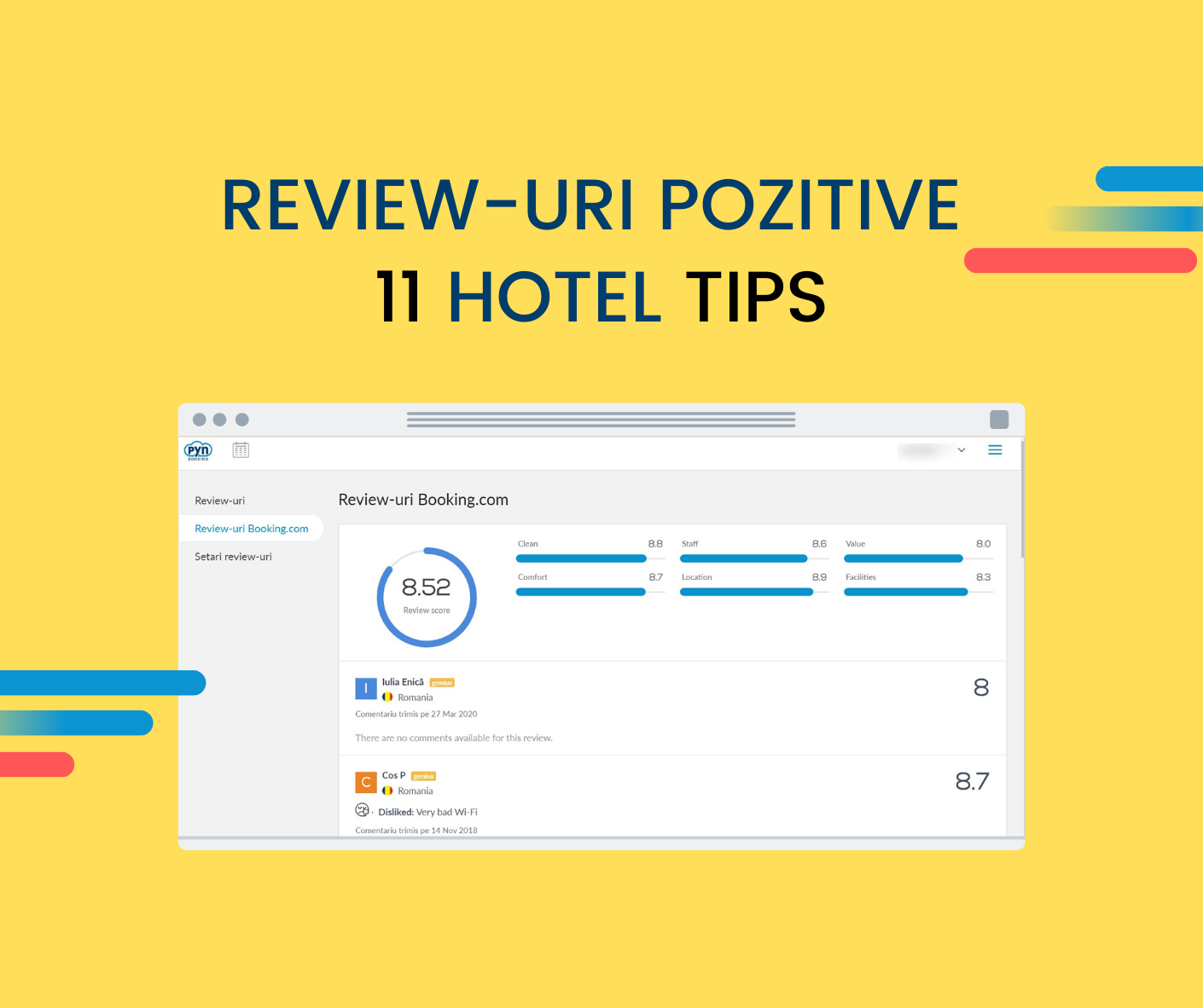
Pynbooking automatically sends review invitations after checkout and centralizes reviews from Booking, Airbnb, your own booking engine, and other sources in one place. The AI response system, configured on your hotel's tone and specifications, generates personalized responses — so no review goes unanswered, regardless of volume.
